

Galata Bridge Fishing!
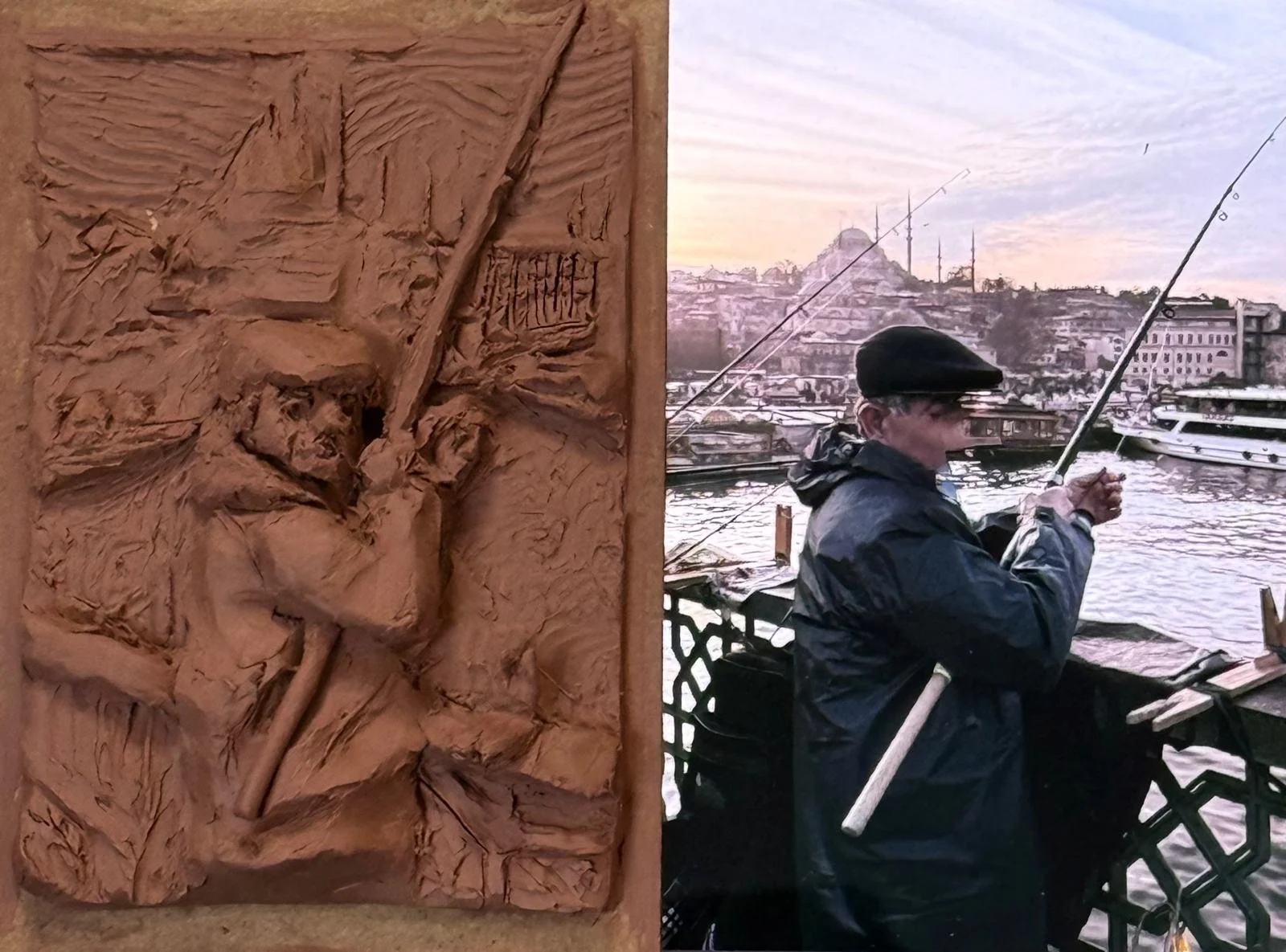
Day or night - rain or shine the dedicated fisherman on the Galata bridge are a mainstay of Istanbul!
I laid out this quick-sculpt on the bridge and put another hour into it back in the studio. Another cold day!
The Galata Bridge (Galata Köprüsü) is more than just a link between the historic peninsula and the northern districts; it is a living monument to Istanbul’s maritime identity. For centuries, fishing from its spans has been a constant thread in the city's social fabric.
The Evolution of the Bridge
The current bridge, completed in 1994, is the fifth iteration of a crossing at this site. Throughout these transformations, the bridge has evolved from a simple wooden structure into a multi-level commercial hub. While the lower level houses restaurants and cafes, the upper deck has remained the domain of the city's amateur anglers.
A Social and Cultural Anchor
Fishing off the Galata Bridge is rarely just about the catch; it is a storied social ritual.
The "Everyman’s" Hobby: Historically, the bridge has served as a Great Equalizer. You will find retirees, blue-collar workers, and tourists standing shoulder-to-shoulder, sharing tobacco, tea, and tips.
The Ecosystem: A unique micro-economy surrounds the fishermen. For decades, "bucket boys" have sold bait, vendors have peddled Simit and tea, and specialized shops nearby have supplied the specific rigs needed to handle the Golden Horn’s currents.
Culinary Impact: The abundance of the Bosphorus—traditionally rich in mackerel, horse mackerel (istavrit), and bluefish—led to the iconic Istanbul street food: Balık Ekmek (grilled fish sandwiches), originally sold directly from boats moored at the bridge’s base.
Ecological Transitions
The history of fishing here also mirrors the environmental health of the Golden Horn.
The Industrial Era: During the mid-20th century, heavy pollution nearly silenced the waters, significantly reducing the variety of fish.
The Recovery: Massive cleanup efforts in the 1980s and 90s saw a resurgence of marine life. Today, while stocks are more regulated and under pressure from overfishing, the sight of hundreds of lines casting into the water remains the quintessential image of Istanbul.